

Kenya’s pension industry has recorded remarkable growth in recent years, with retirement savings surpassing trillions of shillings and pension fund investments increasingly shaping the country’s financial landscape.
Government officials and financial experts have hailed the growth as evidence of a maturing retirement benefits sector capable of providing financial security to workers in their old age. Yet beneath the impressive figures lies a stark reality, millions of Kenyans, particularly those working in the informal sector, remain excluded from pension savings schemes.
According to official statistics, more than 80 percent of Kenya’s workforce earns a living through informal employment, ranging from small-scale traders and boda boda riders to market vendors and casual laborers.
Unlike workers in formal employment who benefit from mandatory pension deductions and employer contributions, most informal workers rely on daily earnings to meet immediate needs, leaving little room for long-term retirement planning. For many, saving for old age remains a luxury overshadowed by pressing demands such as school fees, rent, healthcare and food.
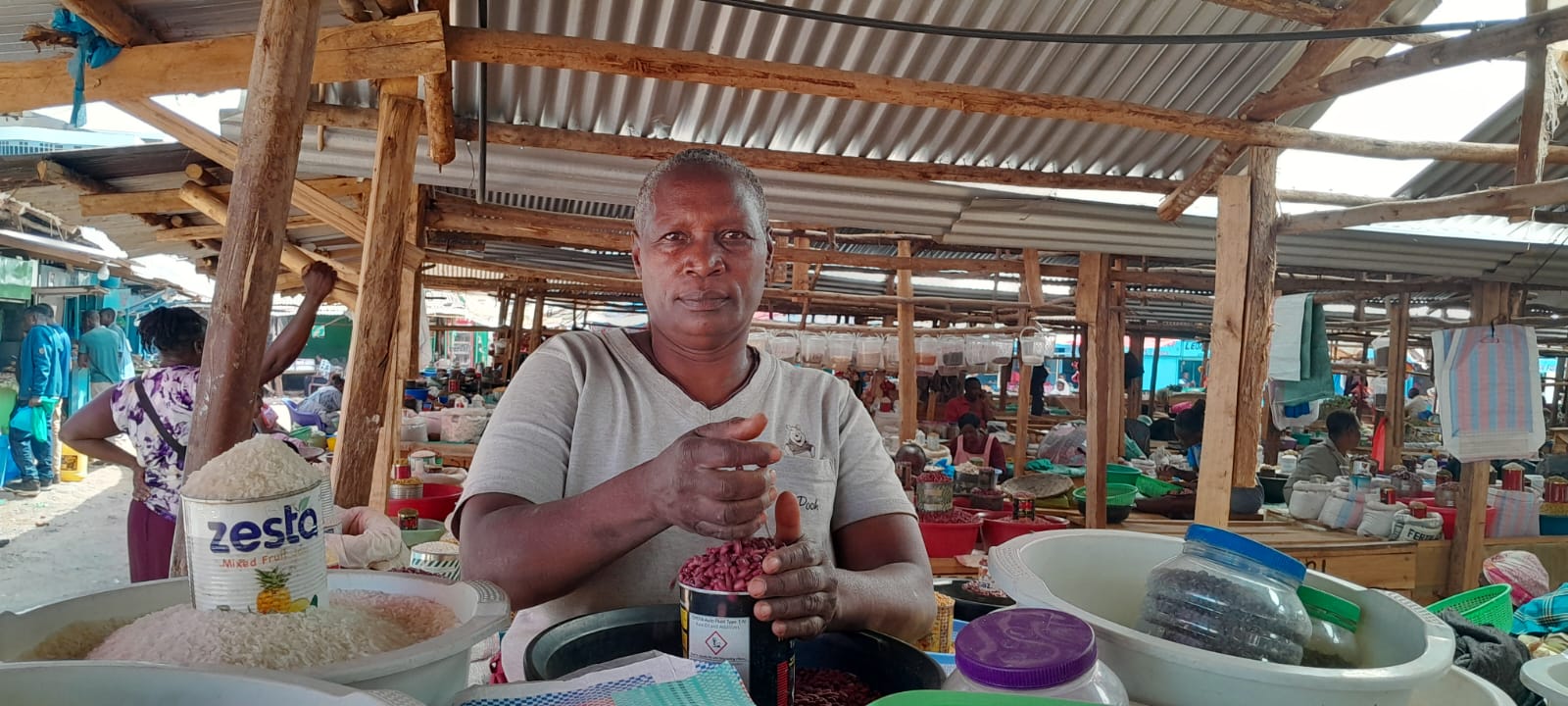
For Joyce Kemunto,55, a businesswoman operating in Kisii Town, retirement is a subject she rarely thought about when she started her enterprise several years ago. Like many traders, she says, her focus has always been on making enough profit to sustain her family and reinvest in her business.
“Every day presents fresh financial demands, leaving little opportunity to set aside money for a future that often feels distant and uncertain.” She notes.
Kemunto says the unpredictable nature of business earnings makes pension contributions difficult. Some months are good, while others are marked by slow sales and rising expenses. For her, during challenging periods, she prioritizes immediate needs such as school fees, stock purchases and household bills.
“Saving for old age becomes difficult even though you know it is important, I know retirement will come one day, but when you are in business, today’s needs often come before tomorrow’s plans,” Kemunto says.
According to Davis Ongiro, a retirement benefits expert and a Chief Executive Officer of Octagon Africa Financial Services (OAFS), pension savings can play a critical role in driving economic growth if funds are invested prudently without exposing contributors to unnecessary risks. He notes that Kenya’s pension industry has accumulated trillions of shillings in assets, making it one of the country’s most significant sources of long-term capital.
“The pension sector holds enormous potential to support national development while delivering sustainable returns to members,” Ongiro.
For him, a large portion of pension assets remains concentrated in traditional investments such as government securities, limiting their impact on economic transformation. By strategically diversifying into sectors such as infrastructure, manufacturing, agriculture, healthcare, housing and renewable energy.
However, he cautions that retirement savings should never be sacrificed in pursuit of higher returns.
“Strong governance, effective risk management and adequate liquidity must remain at the centre of every investment decision, a successful pension system is one that protects contributors while at the same time supporting economic development.” He remarks.
According to George Oyuga, Director of Retirement Solutions at Kuza Asset Management Ltd, the biggest paradox in Kenya’s pension sector is that while the informal economy accounts for nearly 80% of the country’s workforce, pension coverage among informal workers remains at about 2%. This, he says, highlights a deep disconnect between the growth of pension assets and the ability of ordinary Kenyans to participate in retirement savings.
“The informal sector workforce forms approximately 80% of Kenya’s workforce, which is quite significant. This however does not mirror the pension coverage level in the informal sector which remains very low at approximately two per cent,” says Oyuga.
He notes that pension products have largely been designed around the realities of formal employment, where workers earn regular monthly incomes and contribute consistently. However, informal workers often experience fluctuating earnings, making it difficult to fit into existing contribution structures.
“Our local pension infrastructure is not yet there when it comes to the micro-pension approach,” he says. “There are a few personal pension schemes that have made strides in this direction, though their minimum contribution levels may still be out of reach for many informal sector workers.”
To bridge the gap, Oyuga argues that pension providers must rethink their products and embrace greater flexibility. He proposes goal-based savings sub-accounts, micro-pension products and mechanisms that allow workers to save in small amounts whenever they earn income.
He adds that reforms to tax incentives are also necessary, noting that current pension tax benefits assume workers earn regular monthly incomes, a reality that does not reflect the experiences of millions of Kenyans in the informal economy.
According to James Ratemo, Head of Corporate Communications at the Retirement Benefits Authority (RBA), Kenya’s pension sector has experienced steady growth over the years, but a large proportion of the country’s workforce remains excluded from retirement savings. He says pension coverage currently stands at about 26.5% of the working population, translating to nearly four million Kenyans.
For him, it means that close to 75% of workers, most of them in the informal sector, earn a living without setting aside money for retirement, leaving many at risk of poverty once they can no longer work.
“About 75% of Kenyan workers are earning an income, but they are not part of any pension arrangement. They are not saving for retirement,” says Ratemo, adding that when these workers retire, they are likely to retire into poverty and an undignified life.
He attributes the low uptake largely to the belief that pensions are only for formally employed workers whose employers deduct monthly contributions from their salaries. Ratemo says this misconception has discouraged many self-employed Kenyans from planning for retirement despite having access to suitable savings options.
“The perception that if you are not formally employed you do not need to save for retirement is the greatest barrier,” he says.
To widen access, he says, RBA has approved about 60 Individual Pension Plans tailored for workers outside formal employment. Contributors can save flexible amounts through channels such as mobile money without penalties during periods of low income
“We have the products. The challenge is ensuring people know they exist,” he says.
Echoing the need to balance retirement security with national development, Jackson Nguthu, Director of Supervision at the RBA, says pension savings are also an important source of long-term investment capital.
He notes that about 67% of pension assets are invested in government securities that help finance infrastructure and other development projects.
“Pension savings are long-term savings, making them well suited to support the country’s long-term development agenda,” says Nguthu.
“Strong governance, effective risk management and adequate liquidity must remain at the center of every investment decision, a successful pension system is one that protects contributors while at the same time supporting economic development”
— Davis Ongiro, a retirement benefits expert and a Chief Executive Officer of Octagon Africa Financial Services (OAFS)